Prepare for a scenario
The briefing is the learner’s contract for the conversation: it explains the situation, the intended outcome, and the behaviours the exercise is designed to practise.
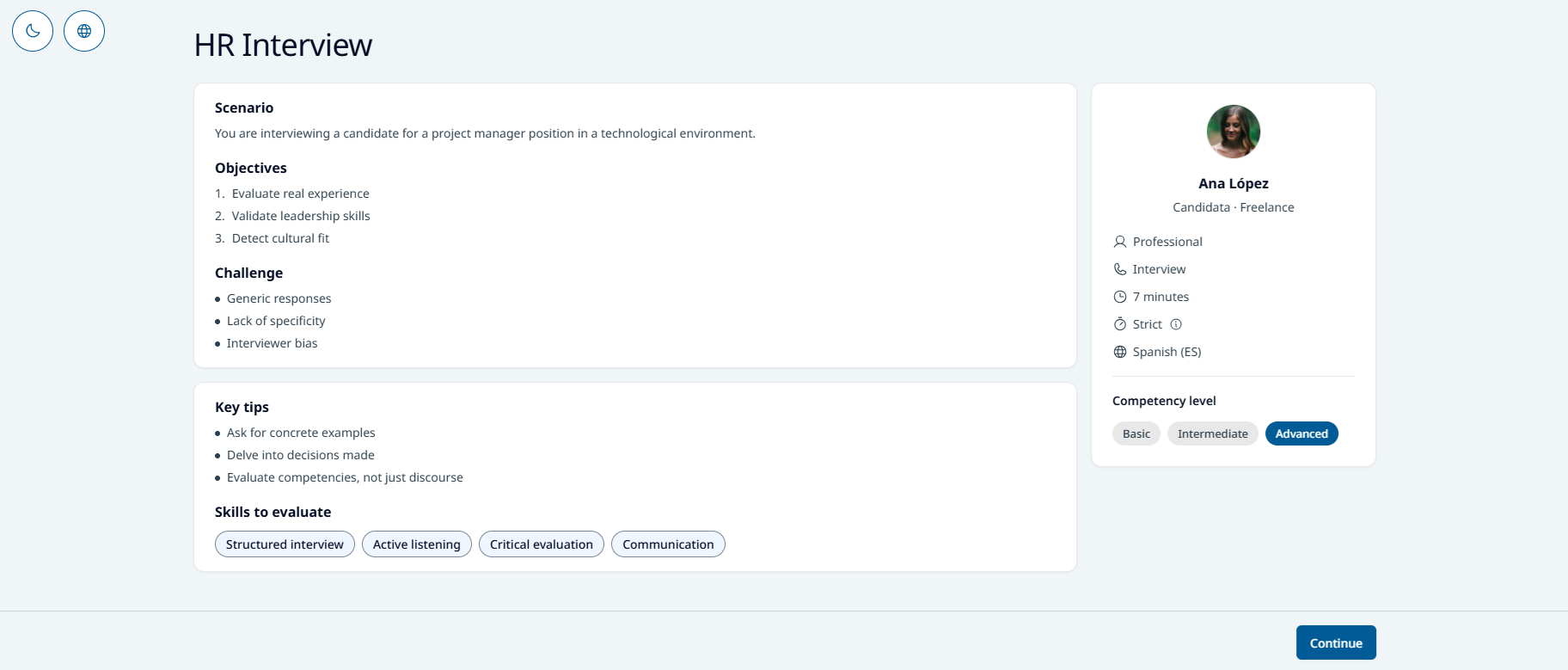
Read the briefing in this order
- Scenario: understand what happened before the call and why the simulated customer is engaging with you.
- Objectives: identify the outcomes you are expected to work toward.
- Challenges: anticipate objections, emotions, missing information, or other difficulties.
- Key tips: translate the learning design into practical conversational behaviours.
- Skills: note which capabilities the exercise is intended to develop and assess.
Understand your counterpart
When configured, the profile card shows the simulated customer’s name, role, organization, preferred language, contact style, and interaction type. It also shows the planned duration, time mode, and configured competency level.
The competency chips describe the configured level; they are not a learner-controlled difficulty selector in the current experience.
Plan without scripting
Use the objectives and tips to plan an approach, not to memorize exact sentences. The assessment is based on evidence in the completed transcript, so make the target behaviours observable: ask the relevant questions, acknowledge concerns, explain decisions clearly, and close the conversation when those actions fit the scenario.
Available languages
The briefing and contextual help are authored for each role-play. Changing the interface language cannot create a translation that was not supplied for the exercise, so use the language selector only when the scenario has been reviewed in that language.
If the briefing does not load, reload the exercise once and then contact support with the Role Play ID and the learner-visible error. Do not send tokens or conversation content. See Troubleshooting.